Blog
/
what-is-third-party-logistics
An Guide to Understanding 3PL Functions, Benefits, and Future Potential
Jesse Stock
on
A Guide to Understanding 3PL Functions, Benefits, and Future Potential
Estimated Reading Time: 10 minutes
What to Expect
This post is for brand owners, e-commerce operators, and supply chain managers who are actively evaluating third party logistics and want a complete picture before making a decision. It covers what 3PL providers actually do across the fulfillment operation, the specific benefits that outsourcing fulfillment delivers at different stages of growth, how 3PL technology is evolving and what that means for brands choosing a fulfillment partner today, and what the right questions are before signing a contract. If you are comparing 3PL options, trying to understand whether your current fulfillment setup is costing you more than it should, or building the business case for outsourced fulfillment inside your organization, this guide covers each of those angles.
Table of Contents
What a 3PL Provider Actually Does Across the Fulfillment Operation
The Core Functions of 3PL Fulfillment Services
The Direct Benefits of Outsourcing Fulfillment to a 3PL Partner
How 3PL Fulfillment Reduces Cost Per Order at Scale
The Role of Technology in Modern 3PL Fulfillment Operations
How 3PL Services Are Evolving and What That Means for Your Fulfillment Strategy
Signs Your Business Has Outgrown In-House Fulfillment
How to Evaluate a 3PL Provider Before You Commit
How Shipping Bros 3PL Delivers Fast, Accurate Fulfillment From Springdale, AR
Third party logistics has moved from a back-office infrastructure decision to a front-line competitive advantage. The fulfillment operation behind an e-commerce brand determines how fast customers receive orders, how often those orders are correct, and what it costs the brand per shipment to maintain those standards. Brands that get their fulfillment right, through capable 3PL partnerships, smart inventory positioning, and technology-connected workflows, compound those advantages into lower customer acquisition costs, higher repeat purchase rates, and a cost structure that improves as volume grows rather than deteriorating under it.
This guide covers the full picture of what 3PL fulfillment looks like in practice, what it delivers financially and operationally, and where the capability is heading so brands can make informed decisions about their fulfillment strategy today and in the next few years.
What a 3PL Provider Actually Does Across the Fulfillment Operation
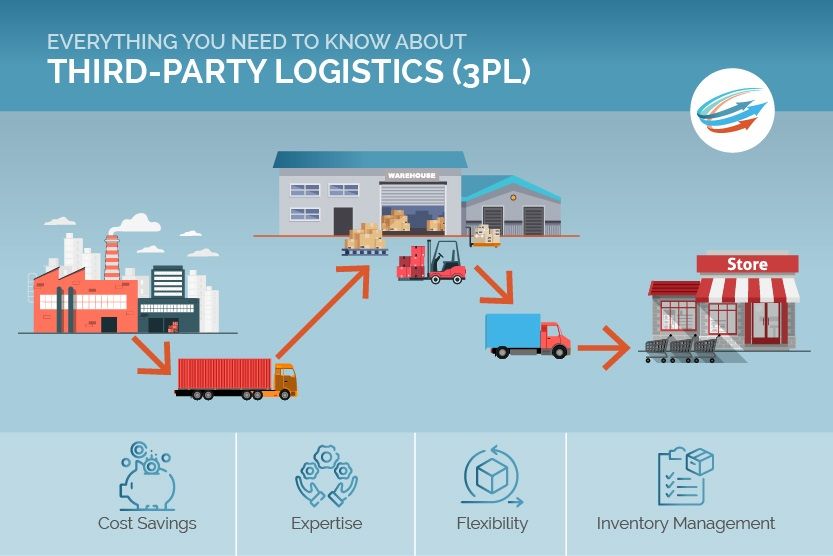
A third party logistics provider manages the physical and operational layer of the supply chain between a brand's inventory and its end customers. That scope covers inbound receiving, storage, order fulfillment, carrier management, and returns processing. For brands that also need kitting, engraving, custom packaging, or retail compliance services, capable 3PL providers extend into those functions as well.
The defining characteristic of a third party logistics relationship is that the 3PL provider owns and operates the fulfillment infrastructure on behalf of the brand. The brand retains ownership of its inventory and its customer relationships. The 3PL handles the warehouse, the labor, the warehouse management system, the carrier accounts, and the fulfillment processes that convert a customer order into a delivered package.
What this means in practice is that a brand partnering with a qualified 3PL fulfillment provider gains immediate access to operational infrastructure, carrier rate leverage, and fulfillment technology that would take years and significant capital to build independently. The fulfillment center is already staffed, the warehouse management system is already configured, the carrier relationships are already in place, and the pick-and-pack workflows are already documented and optimized. The brand plugs in through a storefront integration and starts shipping within days rather than building toward that capability over months.
The Core Functions of 3PL Fulfillment Services
Understanding the specific functions that fall under 3PL fulfillment services makes it easier to evaluate whether a provider's capabilities match what a brand's supply chain actually requires.
Inbound Receiving and Inventory Slotting
Inbound receiving is the first step in the fulfillment cycle. When inventory arrives at the 3PL fulfillment center, it is checked in against the purchase order, scanned into the warehouse management system, and slotted into an assigned bin location. In a well-run fulfillment operation, this process happens within hours of the freight arriving at the dock, not over multiple days. Same-day or next-business-day receiving availability is the standard that keeps inventory flowing cleanly from supplier to customer without unnecessary delays between the two.
Pick, Pack, and Ship
Order fulfillment is the core daily function of a 3PL operation. When a customer order arrives through a connected storefront, it flows automatically into the warehouse management system, generates a pick list, and directs a warehouse associate to the correct bin locations along an optimized path. Every item is scanned against the order at the point of pick. At the pack station, the carton is selected, the order is packed, and a weight verification check confirms accuracy before a label is printed. The shipment is then rate-shopped across carriers, labeled, and staged for pickup.
This sequence, when executed through a technology-directed workflow with scan verification and weight checking at each accuracy gate, consistently produces order accuracy rates at or above 99.5 percent. That accuracy rate is the operational standard a brand should expect from any 3PL fulfillment partner they are seriously evaluating.
Carrier Management and Rate Shopping
3PL providers that ship sufficient aggregate volume across their client base negotiate carrier rates that individual brands rarely achieve on their own. Those negotiated rates apply to every outbound shipment, which means brands accessing fulfillment services through a 3PL often pay less per shipment than they would managing their own carrier contracts. Combined with automated rate shopping that evaluates UPS, FedEx, USPS, and regional carriers on every shipment in real time, carrier management through a 3PL fulfillment operation consistently produces lower cost per shipment than self-managed shipping.
Returns Processing
Returns processing is the reverse logistics function that receives returned merchandise, inspects and grades it, restocks sellable units, and handles disposition for non-resalable items. A 3PL that handles returns as part of its core fulfillment services keeps the entire logistics cycle within a single managed operation, which simplifies the brand's operations and ensures that returned inventory feeds back into available stock quickly and accurately.
Value-Added Fulfillment Services
Value-added services are the fulfillment functions beyond standard pick-and-pack that differentiate capable 3PL providers from basic warehousing operations. These include kitting and assembly, custom packaging, branded unboxing, engraving and personalization, retail compliance labeling, and gift fulfillment. Brands that require any of these capabilities should evaluate them as core criteria in the 3PL selection process rather than assumptions about what every provider offers.
The Direct Benefits of Outsourcing Fulfillment to a 3PL Partner
The benefits of outsourcing fulfillment to a qualified 3PL provider are operational, financial, and strategic. Understanding each category helps build the business case for making the move and sets the right expectations for what the partnership delivers.
Operational benefits are the most immediate. Fulfillment speed improves because a 3PL fulfillment center has the staffing, the warehouse layout, and the technology already configured for high-throughput order processing. Order accuracy improves because scan verification and weight checking are standard controls in a well-run 3PL operation, not manual checks dependent on individual attention. Inbound inventory becomes available for order fulfillment faster because a 3PL receiving dock is designed and staffed for rapid receiving.
Financial benefits compound over time. Carrier rate access through a 3PL reduces cost per shipment. Converting warehouse fixed costs into variable fulfillment costs that scale with order volume eliminates the overhead of a leased facility that sits underutilized outside peak periods. Reduced order error rates cut the cost of reshipments, return label funding, and customer service volume that incorrect fulfillment generates. Each of these financial improvements is measurable against the per-order fulfillment cost the 3PL charges.
Strategic benefits create competitive position. A brand that outsources fulfillment to a capable 3PL partner frees operational management attention for product development, marketing, and customer acquisition rather than warehouse management and carrier negotiations. It also gains the ability to scale order volume through peak periods without the hiring surge and training lag that in-house fulfillment requires during high-demand windows.
How 3PL Fulfillment Reduces Cost Per Order at Scale
Cost per order is the metric that most directly reflects the financial efficiency of a fulfillment operation. It captures labor, storage, materials, and shipping in a single figure that can be tracked across time and compared against alternatives. Understanding how 3PL fulfillment reduces cost per order at scale makes the financial case for outsourcing concrete.
Carrier rate leverage is typically the largest single cost reduction. A 3PL provider shipping hundreds of thousands of packages per month across all its clients negotiates carrier rates that reflect that aggregate volume. Individual brands shipping a fraction of that volume negotiate from a proportionally weaker position. The carrier rate differential alone often offsets a significant portion of the per-order fulfillment fee a 3PL charges.
Labor efficiency in a 3PL fulfillment center is higher than in most in-house operations because the processes are optimized for throughput. Directed picking, batch and wave picking configurations, and optimized warehouse slotting reduce the labor minutes per order below what an unoptimized in-house operation achieves. Lower labor minutes per order translates directly to lower fulfillment cost per order.
Geographic inventory positioning reduces shipping zone distance, which reduces per-shipment carrier cost. A fulfillment center located near a brand's customer concentration ships shorter distances at lower zone rates than one located far from that concentration. For brands with a strong south-central customer base, fulfilling from Springdale, AR rather than a coastal warehouse reduces average zone distance and average cost per shipment across the affected order volume. Brands making this move regularly see freight savings in the 15 to 30 percent range on south-central shipments.
Packaging optimization through cartonization logic reduces dimensional weight billing across the entire fulfillment volume. Selecting the smallest viable carton for each order reduces the billable weight on every shipment where dimensional weight exceeds actual weight. At high fulfillment volumes, the per-order savings from packaging optimization compound into a meaningful reduction in total freight spend.
The Role of Technology in Modern 3PL Fulfillment Operations
Technology is the operating layer that separates a modern 3PL fulfillment operation from a warehousing service that happens to ship packages. The warehouse management system, the storefront integrations, the carrier connections, and the client reporting tools are not peripheral to the fulfillment capability. They are the fulfillment capability.
A warehouse management system with directed picking, scan verification, batch picking, and real-time inventory tracking is the foundation. Without it, fulfillment speed and accuracy depend on individual judgment rather than systematic control, and both metrics degrade as volume increases. The presence of a properly configured WMS is the single most important technology indicator of whether a 3PL fulfillment center will perform consistently.
Direct API integrations with Shopify, WooCommerce, Amazon, Walmart, and other storefronts eliminate the lag and error risk of manual order processing. Orders flow from the storefront into the fulfillment workflow within minutes of placement. Inventory levels sync back to the storefront in real time so available-to-promise quantities are accurate across every sales channel. Tracking information pushes back to the storefront automatically so the customer-facing post-purchase experience runs without manual intervention.
Client-facing reporting that provides real-time visibility into inventory levels, open orders, outbound shipments, and returns status gives brand operators the data to make informed purchasing, marketing, and customer service decisions. A 3PL partner that provides this visibility through a live dashboard rather than weekly email reports is operating at the technology standard the current fulfillment environment requires.
How 3PL Services Are Evolving and What That Means for Your Fulfillment Strategy
Third party logistics services are evolving in ways that expand what is available to growing brands and raise the standard for what a capable 3PL fulfillment partner looks like. Understanding the direction of that evolution helps brands make 3PL partnership decisions that remain sound as the logistics landscape continues to change.
Automation within 3PL fulfillment centers is advancing. Goods-to-person picking systems, automated storage and retrieval, and robotics-assisted fulfillment are reducing per-order labor cost and increasing throughput at the high end of the 3PL market. Brands choosing fulfillment partners with long-term growth ambitions should evaluate whether the provider is investing in automation capability or relying on a labor model that becomes less competitive over time.
Same-day and next-day delivery expectations are expanding beyond major metro areas. As customer delivery expectations continue to compress, 3PL providers with late cut-off times and well-positioned fulfillment centers have a structural advantage in meeting those expectations at ground shipping rates. A 3PL partner in the right geographic position, with a late cut-off and a fast inbound receiving process, enables brands to make competitive delivery promises to a larger share of their customer base.
Data integration between brands and their 3PL fulfillment partners is deepening. Demand signal sharing, inventory replenishment automation, and carrier performance reporting are moving from manual processes to real-time data connections that reduce the decision lag between a trend in customer demand and the fulfillment operation's response to it. Brands that build these data connections with their 3PL partners gain a supply chain responsiveness advantage over those running on weekly reports and manual reorder processes.
Sustainability in fulfillment is becoming a purchasing consideration for a growing share of consumers and corporate buyers. 3PL providers that are investing in packaging reduction, route optimization for lower emissions, and sustainable materials sourcing are better positioned to serve brands whose customers weigh environmental impact in their purchase decisions.
Signs Your Business Has Outgrown In-House Fulfillment
Most brands that move to 3PL fulfillment do so because their in-house operation has reached a point where the cost and complexity of maintaining it exceeds the value of the control it provides. The following signals indicate that point has arrived or is approaching.
Order fulfillment accuracy has dropped below 99 percent and climbing error rates are generating a visible increase in customer service contacts, return authorizations, and reshipment costs. The fulfillment team is spending more than one business day from order placement to shipment on a regular basis. Warehouse space is consistently at or above 85 percent utilization, leaving no room for inbound replenishment without displacing active inventory. Peak season fulfillment requires temporary staff who slow throughput and increase error rates while they are being trained. Shipping cost as a percentage of revenue has been rising without a corresponding improvement in delivery performance or customer experience.
Any one of these signals is worth a serious evaluation of 3PL fulfillment alternatives. More than one appearing simultaneously makes the business case for outsourcing fulfillment urgent rather than optional.
How to Evaluate a 3PL Provider Before You Commit
Selecting a 3PL fulfillment partner is a decision that affects customer experience, unit economics, and operational capacity for the duration of the contract. The evaluation process should be specific enough to produce a comparison based on operational capability and total cost rather than relationship and pitch quality.
Request documented order accuracy rates, same-day fulfillment cut-off times, average inbound receiving speed, and carrier on-time delivery performance. Providers that cannot produce documented performance data on these metrics are operating without visibility into their own operational quality, which is a direct predictor of client experience.
Ask for a live demonstration of the warehouse management system and the client dashboard rather than a slide deck. Seeing how orders flow, how picks are directed, and how exceptions are handled in the actual system reveals operational practice in a way that a presentation cannot replicate.
Build a total landed cost per order comparison using your actual order profile, including receiving fees, storage, pick and pack, materials, outbound shipping, and returns processing. Compare providers on this total figure rather than the per-order fulfillment fee in isolation. The provider with the lowest headline rate and the weakest carrier access or slowest receiving often costs more in total than one with a higher stated fee and better operational performance.
Evaluate the geographic fit between the provider's fulfillment center location and your customer concentration. A high-performing fulfillment center in the wrong location for your customer base is still generating excess freight cost and transit time that no amount of operational excellence can offset.
How Shipping Bros 3PL Delivers Fast, Accurate Fulfillment From Springdale, AR
Shipping Bros 3PL is an asset-based third party logistics provider in Springdale, AR operating a technology-led fulfillment center built around the performance standards growing brands require. Inbound inventory is received and available for fulfillment same day in most cases. Orders from Shopify, WooCommerce, Amazon, and Walmart flow into the warehouse management system automatically through direct API integrations. Pick lists are generated and directed to warehouse staff along optimized paths immediately. Every pick is scan-verified against the open order. Every packed carton is weight-checked before a label is printed.
Outbound fulfillment is rate-shopped in real time across UPS, FedEx, USPS, and regional carriers. Tracking information pushes automatically to the connected storefront and triggers the brand's shipping confirmation email to the customer without any manual step. Clients have live visibility into inventory levels, open orders, and outbound fulfillment through a real-time dashboard. Low-stock alerts are configured at the SKU level so purchasing teams stay ahead of stockouts before they affect order fill rates. Returns are received, graded, and restocked quickly so inventory records stay accurate and refunds process without delay.
Springdale puts the south-central United States within a one to two day ground transit radius. Dallas, Kansas City, Memphis, St. Louis, Oklahoma City, Nashville, Tulsa, and Little Rock are all ground-reachable in one to two days. Brands currently fulfilling from coastal warehouses and paying expedited rates to reach south-central customers in two days consistently find that moving fulfillment to Springdale delivers the same delivery promise at ground rates, with freight savings typically in the 15 to 30 percent range on affected shipments.
Every client works with a dedicated account team based in Springdale who knows the fulfillment operation, the client's catalog, and their service level requirements in enough detail to make fast, accurate decisions when exceptions arise or volume spikes.
If your brand is evaluating 3PL fulfillment options and you want a concrete comparison based on your actual order volume, current fulfillment costs, and storefront setup, bring those numbers to the conversation. We will show you exactly what fulfillment from Shipping Bros in Springdale looks like operationally and financially for your business.