
Blog
/
what-is-3pl-in-ecommerce
Strategies for Maximizing Efficiency Through Fulfillment Software
Jesse Stock
on
Strategies for Maximizing Efficiency Through Fulfillment Software
Estimated Reading Time: 9 minutes
What to Expect
This post is for operations managers, e-commerce brand owners, and logistics teams actively evaluating or currently using fulfillment software and looking to get more out of it. It covers the core strategies that drive efficiency gains through warehouse management systems, order management platforms, and carrier integrations, along with the specific levers that matter most for speed, accuracy, and cost. If you are deciding whether to invest in fulfillment software, figuring out why your current system is underperforming, or choosing a 3PL partner that runs on modern fulfillment technology, this guide covers the ground that matters.
Table of Contents
Why Fulfillment Software Is the Operational Foundation of a Fast 3PL
Warehouse Management System Features That Drive Real Efficiency Gains
How Order Management Software Eliminates Fulfillment Bottlenecks
Carrier Integration Strategies That Lower Cost Per Shipment
Inventory Management Software and the Real Cost of Record Inaccuracy
Automation Rules That Reduce Manual Work Across the Fulfillment Workflow
Using Fulfillment Software Data to Benchmark and Improve Operations
How to Evaluate Fulfillment Software When Choosing a 3PL Partner
How Shipping Bros 3PL Uses Fulfillment Technology to Ship Fast and Accurate
Fulfillment software is the difference between a warehouse that runs on tribal knowledge and gut feel and one that runs on directed workflows, real-time data, and repeatable processes. The physical work of picking, packing, and shipping does not change. What changes is how well that work is coordinated, measured, and improved over time. Operations that invest in the right fulfillment technology and use it well consistently outperform those that do not on every metric that matters: order accuracy, fulfillment speed, shipping cost, and inventory reliability.
This guide covers the specific strategies that turn fulfillment software from a system of record into an active driver of operational efficiency.
Why Fulfillment Software Is the Operational Foundation of a Fast 3PL
Every high-performing fulfillment operation, whether in-house or run by a third party logistics provider, is built on a software layer that connects the storefront to the warehouse floor to the carrier network. Without that layer, information moves slowly, manually, and unreliably. Orders have to be imported by hand or on a schedule. Pick lists are printed rather than directed. Carrier selection requires manual lookups. Tracking numbers have to be exported and re-uploaded to the storefront. Each of these manual steps adds time and introduces error risk at the exact points in the process where speed and accuracy determine the customer experience.
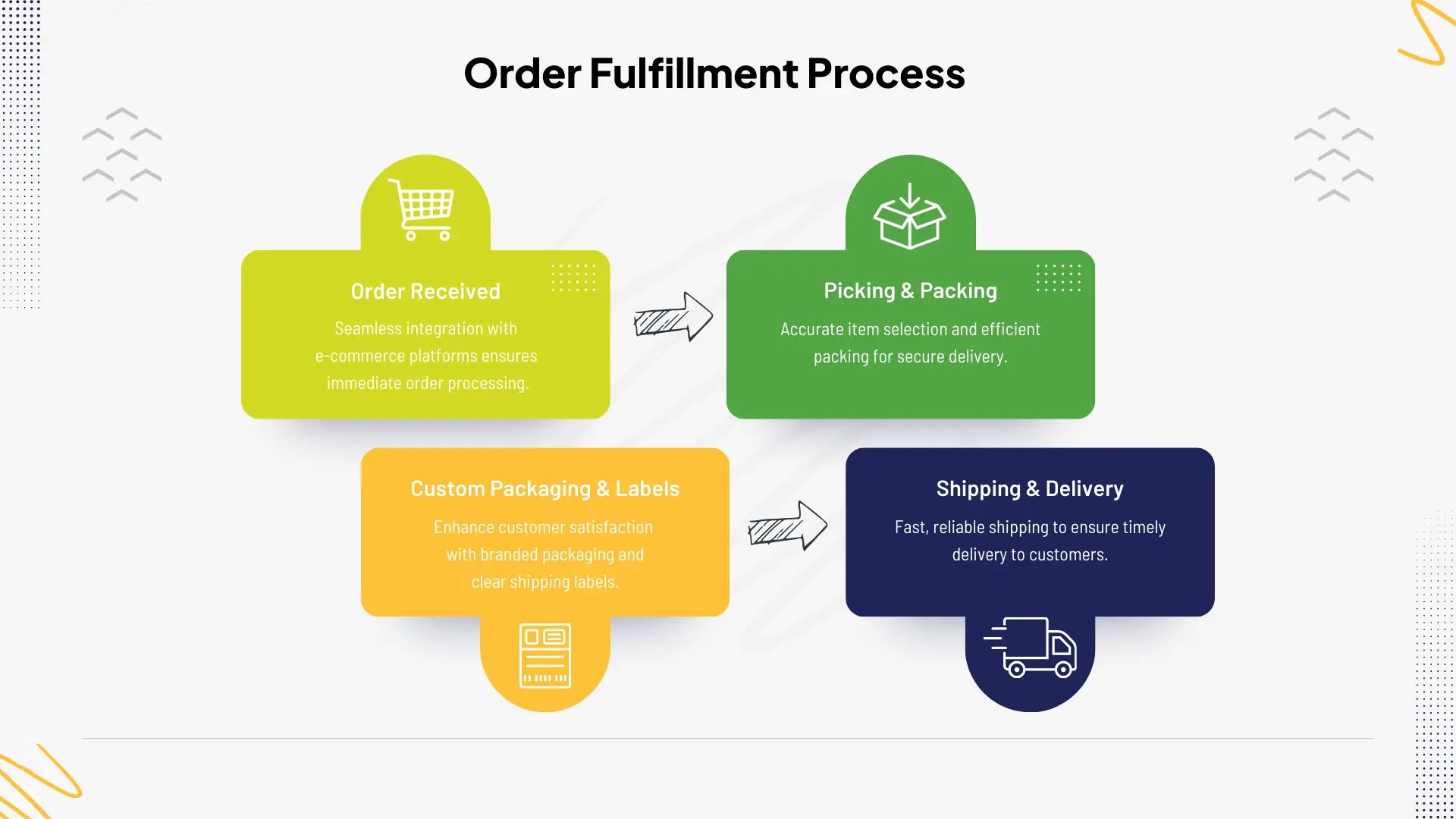
Fulfillment software eliminates the manual handoffs. An order placed on Shopify at 2:47 PM flows into the warehouse management system in minutes, generates a pick list automatically, directs a warehouse associate to the correct bin locations, confirms accuracy through barcode scanning, selects the optimal carrier and service level through automated rate shopping, prints the label, and pushes the tracking number back to the storefront without a human facilitating any step of that sequence.
The result is not just faster fulfillment. It is a fulfillment operation that scales without proportionally adding labor or error rate. The same software configuration that handles 500 orders per day handles 5,000 orders per day without rebuilding the process. For brands choosing a 3PL partner, the quality of the provider's fulfillment software stack is one of the most important factors in the selection decision.
Warehouse Management System Features That Drive Real Efficiency Gains
A warehouse management system is the core of fulfillment software. It manages inventory location, directs warehouse workflows, enforces accuracy controls, and provides the data that operations teams use to make decisions. Not all warehouse management systems are built equally, and the features that drive the largest efficiency gains are worth understanding before selecting a platform or a 3PL partner.
Directed picking routes warehouse associates along optimized paths through the facility, minimizing travel distance per order. In a large fulfillment center, unoptimized pick paths waste significant labor hours every day. A warehouse management system that calculates shortest-path routes dynamically and updates them as inventory moves and order volume changes reduces pick time per order at scale, which translates directly into faster fulfillment and lower labor cost per shipment.
Batch and wave picking allow multiple orders to be picked simultaneously rather than one at a time, which dramatically increases picker productivity on single-item or low-SKU orders. The warehouse management system groups orders by zone, item overlap, or carrier deadline and generates optimized multi-order pick lists. Fulfillment operations that use batch picking consistently process more orders per labor hour than those running single-order workflows.
Scan verification at pick confirms that the correct item and quantity were selected before an order moves to the pack station. Every scan is checked against the open order line in real time. If an associate scans the wrong item, the system flags it immediately. Catching errors at the point of pick is significantly less costly than catching them at the point of return, which is why this feature is non-negotiable in any fulfillment operation targeting order accuracy above 99 percent.
Real-time inventory location tracking knows exactly where every unit of every SKU is in the facility at all times. This eliminates the picker dead time of searching for misplaced inventory, supports accurate cycle counting, and enables reliable available-to-promise inventory figures on connected storefronts.
How Order Management Software Eliminates Fulfillment Bottlenecks
Order management software is the layer between the storefront and the warehouse management system. It receives orders from multiple sales channels, applies routing and priority rules, and passes order data downstream to the fulfillment workflow. In operations running multiple storefronts or selling across several marketplaces, order management software is what prevents channel volume from creating confusion and delays at the fulfillment level.
The most impactful efficiency gain from order management software is the elimination of manual order processing. When orders flow automatically from Shopify, WooCommerce, Amazon, Walmart, and other connected channels into a single fulfillment queue, the time between order placement and pick list generation drops to minutes. Brands that still manually download and upload order files accept a lag at the start of the fulfillment process that cannot be recovered later no matter how fast the warehouse operates downstream.
Order routing rules built into the order management platform handle split-shipment logic, multi-warehouse routing, and backorder management automatically. When a multi-item order contains one SKU that is out of stock at one location and available at another, the software splits the shipment and routes each component appropriately without a human making that decision manually for each exception. At high order volumes, this automation is the difference between a manageable exceptions queue and an operation that cannot keep up.
Carrier Integration Strategies That Lower Cost Per Shipment
Carrier integrations built into fulfillment software enable automated rate shopping, label generation, and tracking updates across multiple carriers simultaneously. The strategy for getting maximum value from carrier integrations goes beyond simply connecting the accounts.
Rate shopping logic should be configured to evaluate every carrier and every eligible service level for each shipment at the time the label is generated. The optimization criteria should reflect the brand's delivery promise. If two-day delivery is the commitment, the rate shopping logic should select the least expensive service that consistently meets a two-day transit window for the destination zip code, not the absolute cheapest option regardless of transit time.
Carrier diversification reduces vulnerability to volume constraints, service failures, and rate increases from any single provider. Fulfillment software that supports connections to regional carriers alongside national carriers gives the operation more options per shipment and access to better rates in markets where regional providers have a structural cost advantage. Building those integrations before they are urgently needed means they are available and tested when the primary carrier has a service disruption or announces a rate increase.
Shipping rules that automate carrier selection based on package weight, dimensions, destination zone, and service level eliminate manual carrier decisions on individual orders. These rules should be reviewed quarterly and updated to reflect changes in carrier rate structures, new carrier relationships, and shifts in order profile. A set of carrier selection rules that was optimized 18 months ago may be leaving meaningful savings on the table if it has not been revisited.
Inventory Management Software and the Real Cost of Record Inaccuracy
Inventory management software maintains the system of record for on-hand quantities, reserved inventory against open orders, and expected inbound stock from purchase orders. The accuracy of that record determines everything downstream: what can be promised to customers, what needs to be reordered, and how reliably orders can be picked without substitutions or shorts.
The real cost of inventory record inaccuracy is broader than most operations fully account for. Inaccurate records generate phantom stockouts, where inventory physically exists in the warehouse but the system shows zero availability and the storefront shows out of stock. They generate mispicks, where a picker trusts the system location and finds a different SKU than expected. They generate failed orders, where a customer receives a partial shipment because the inventory count was wrong at the time the order was promised.
Cycle counting functionality in warehouse management software supports the rolling physical verification process that keeps inventory records accurate without requiring a full facility shutdown for a physical count. An effective cycle count program, configured to count high-velocity and high-value SKUs more frequently than slow movers, closes the gap between system and physical inventory on an ongoing basis. Operations that run disciplined cycle count programs through their fulfillment software consistently maintain inventory accuracy above 99 percent.
Low-stock alerts and reorder point notifications built into inventory management software give purchasing teams advance warning before a stockout occurs. Setting these thresholds correctly, accounting for lead time variability and demand variability rather than just average daily sales, is the configuration work that makes inventory software proactive rather than reactive.
Automation Rules That Reduce Manual Work Across the Fulfillment Workflow
Fulfillment software generates efficiency through automation rules that handle repetitive decisions without requiring human review on each individual case. Building out these rules thoughtfully, and maintaining them as the business changes, is where operations teams extract sustained value from their software investment.
Address validation rules that check outbound shipping addresses against carrier address databases before label generation prevent delivery failures and address correction fees from reaching the shipping cost line. Addresses that fail validation are flagged for review rather than shipping to an undeliverable destination.
Order hold rules that pause fulfillment on orders that meet specific criteria, such as high-value orders above a threshold, orders with expedited service requested, or orders from new accounts in a B2B context, prevent costly mistakes from leaving the building without review. These rules should be specific and narrow to avoid creating unnecessary delays on standard volume.
Packing rules that assign carton types based on SKU dimensions and order quantity automate cartonization decisions that would otherwise require individual judgment calls at each pack station. When configured with accurate SKU dimensions, packing rules consistently select the smallest viable carton, reducing dimensional weight billing and packaging material consumption across every shipment.
Post-ship automation that triggers branded tracking notification emails, updates marketplace order status, and initiates customer review requests removes an entire category of manual post-fulfillment work that many operations still handle by hand.
Using Fulfillment Software Data to Benchmark and Improve Operations
The reporting layer of fulfillment software is where operational improvement happens systematically rather than reactively. Operations teams that review fulfillment software data regularly identify trends, catch degrading performance before it affects customers, and make decisions on process changes with evidence rather than intuition.
Order accuracy rate tracked by shift, by picker, and by SKU identifies where errors concentrate. A spike in mispicks on a specific SKU may reveal a slotting problem or a labeling error. A picker whose accuracy rate is declining may need retraining or reassignment. Neither issue is visible without the data.
Fulfillment cycle time, measured from order receipt to label generation, identifies where orders are spending time in the queue. Cycle times that are lengthening may indicate a staffing problem, a wave configuration that needs adjustment, or a software integration that is creating a delay in order flow.
Carrier performance data tracked through the fulfillment software shows on-time delivery rates, damage incidents, and exception frequency by carrier and by lane. This data is the input for carrier strategy conversations and contract renegotiations. Without it, carrier management is reactive and relationship-based rather than performance-based.
Inventory turnover by SKU, aging inventory reports, and days on hand calculations give purchasing and merchandising teams the data to make informed decisions about reorder timing, clearance, and SKU rationalization.
How to Evaluate Fulfillment Software When Choosing a 3PL Partner
When selecting a third party logistics provider, the quality and configuration of their fulfillment software is a direct proxy for operational performance. The technology decisions a 3PL has made reflect what they believe matters in running a fulfillment operation, and those beliefs show up in the results clients experience.
Ask specifically about the warehouse management system the provider uses, how orders flow from storefronts into the system, how pick accuracy is enforced, and what reporting is available to clients in real time. A provider that can answer these questions in operational detail is running a technology-led operation. A provider that answers vaguely or deflects to relationship and service quality claims is likely running a more manual operation than the pitch materials suggest.
Ask whether the 3PL's fulfillment software supports your specific storefronts and marketplaces through direct API connections. Manual order imports are a flag that should prompt follow-up questions about cut-off time reliability and order processing lag. Ask what the process is when an integration fails and how quickly the operations team identifies and resolves the issue.
Request a live demonstration of the warehouse management system rather than a slide deck. Seeing how orders flow, how picks are directed, and how exceptions are handled in the actual system reveals operational reality in a way that a presentation cannot.
How Shipping Bros 3PL Uses Fulfillment Technology to Ship Fast and Accurate
Shipping Bros 3PL in Springdale, AR runs a technology-led fulfillment operation where software configuration drives speed and accuracy on every order. Inbound inventory is received and slotted same day in most cases, with system availability for order picking within hours of arrival. Orders from connected storefronts including Shopify, WooCommerce, Amazon, and Walmart flow into the warehouse management system automatically through direct API integrations. Pick lists are generated immediately and directed to warehouse associates along optimized paths. Every pick is scan-verified against the open order. Every packed carton is weight-checked before a label is printed.
Outbound shipments are rate-shopped in real time across UPS, FedEx, USPS, and regional carriers. Tracking information pushes back to the connected storefront automatically and triggers the brand's own shipping confirmation email to the customer without any manual action. Clients have live visibility into inventory levels, open orders, and outbound shipments through a real-time dashboard. Low-stock alerts are configured at the SKU level so purchasing teams get advance warning before a stockout affects order fill rates.
Every client works with a dedicated account team in Springdale who understands the technology configuration, the seasonal patterns, and the service level requirements well enough to make fast decisions when something needs attention.
If your current fulfillment operation is slower, less accurate, or more expensive per order than it should be, and you want to understand what a technology-led 3PL operation in Springdale, AR looks like in practice, bring your order volume, your current fulfillment costs, and your storefront setup. The conversation is straightforward and the comparison is concrete.